Wednesday, April 11, 2007

My office – a typical Terai house

My office at DWO looks like a typical house in city areas of the Terai. For reason that mostly are based on economy rather than logic the house is painted on the front only as if it is expected that any day a new house will be building in connection with the unpainted side of the house, so that the boring grey cement doesn’t show.

The office is in two stores with the district office on ground floor and the regional office on the first floor. My office is on the first floor with my desk right by the window you can see on the picture. In the summer the curtains are closed to keep the strong sun out, so we sit in the dark and work. During the monsoon it rains in through the window so we have to cover the window with plastic and once again we work in the dark. Only in the cold season do we get a bit of light for our work, since the office is so cold that we work on the roof top in order to get a bit of sun…..and that is how a typical Terai house is….

Saturday, March 31, 2007

Weekend getaway

It is starting to get warmer in Nepal and the perfect weather for weekend trips. I am lucky enough to live less than 2 hours drive from Bardiya national park – the perfect spot for weekend trips.
We were 12 friends leaving Nepalgunj early Saturday morning to get to the park in time for a full-day rafting trip on the Karnali river, the longest river of Nepal. 7 years ago I was on a 10-day rafting trip on the same river but further up north. It was a wild trip with lots of white water. This weekends rafting was quite different. The river was very calm and we could just float along enjoying the nature and the cold beer. However, there were other elements of excitement such as river dolphins, beautiful birds and a rhino with its baby. We stayed on the river to watch the sunset and reach our lodge just as it became dark. All in all a really beautiful trip.

The following day we went on a jungle walk hoping to see a glimpse of a tiger. However, being 12 tourists walking around between the trees makes more than enough noise to warn any tiger with a kilometer. Still, the nature was great, the monkey funny and the “bambis” adorable.

It was a wonderful weekend and far from the last weekend spent in Bardiya – actually I have already planned a trip in 10 days with my colleague, Jeppe, and his family. Now is the perfect time to spot tigers so I will try again – this time in a smaller group ;-)

Thursday, March 15, 2007

News from Nepal - and Anne

I know that it has been a while since I last wrote on this blog, but the routine of every-day-life is getting to me. Still, here is a small update from my life:


MS’s annual meeting
In the beginning of February I went to MS annual meeting in Kathmandu. Representatives from all of our partner organisations were there as well as all development workers. Besides from this we also had prominent guests from Denmark namely, our general secretary, Frans Mikael (see the pix) and the vice chair of the MS board. It was an extremely interesting 3 day meeting and also a great opportunity to get to know many members of the MS family.


My bike
My motorcycle has finally arrived to Nepalgunj. Because of the many bandas it has been useful whenever cars are not allowed to drive on the roads. However, we have had a week of tropical storms and I learned the hard way that my North Fake rain trousers bought in Nepal 7 years ago no longer are water proof – so now the bike stays at home on rainy days.


My home
I have finally managed to furnish my apartment to a degree that I would actually call it a home. Still, I need to find lamps, plants and stuff to hang on the wall, which is quite challenging, since there is no IKEA in Nepalgunj. I have put a few pix for you.


Work
At work my colleagues and I have just produced an action plan for me for the coming year. There plan contains many different assignments such as revision of monitoring system, baseline study of new Dalit groups, producing a new documentation system just to mention a few. There are plenty of things to do and lots of challenges which is how I like it. Unfortunately, the many bandas and fighting on the streets has made it difficult to go to the office so I have spent a lot of time at home lately.

Weddings
It seems that everyone is getting married these days that I am to be involved in these festivities one way or another. Either through sleepless nights due to celebrations through big speakers blasting Indian music all over town or through invitiations to wedding of people I have never heard of. I have, however, only participated in one where I knew the brides brother. The others I have avoided since I still haven’t gotten used to going to weddings of total strangers. There is one wedding, though, that I regret haven’t attended namely, that wedding of a 12 year old girl and a fruit!!! A tradition belonging to the Newar people, which seems rather odd. It would have been extremely interesting to witness this ceremony but unfortunately I had an important meeting at the time of the wedding. Still, I hope that the happy couple - a girl and a fruit – will have a long and happy marriage.

Wednesday, February 28, 2007

The King of Nepal

Nepal has always been known as the Worlds only Hindu Kingdom and it was believed that the King was in a direct line from the Gods. Previously this was something the Nepalese were very proud of but today the attitude towards the royal family is different. Everything changed the night of the 1st June, the date of the royal massacre. A drunk and upset crown prince (his parents wouldn’t allow the marriage between him and the woman he loved) shot and killed 9 members of the royal family including King Birendra and Queen Aishwarya before shooting himself dying 2 days later.

Though this is the official version there are plenty of conspiracy theories involving both CIA and India. Most theories do point toward the current King Gyanendra (brother of the old King) since he gained the most from the tragic night. Most Nepalese believe that the direct line to the Gods have been broken and when the King in February 2005 through a military coup took power from the parliament to stop the Maoists and the 10 year long conflict, he lost most sympathy with the population.

In April 2006 the political parties alongside with the Maoist went to the streets and after several days of mass demonstrations in all of Nepal – and 16 dead – the King was forced to give up power and make space for the democratic process that Nepal currently is in.

Once of the first things done by the reinstated parliament was to strip the King of all power thereby reducing him to a ceremonial figure. In the upcoming election the population will then be asked to decide the fate of the monarchy and already now the Maoists and other political parties are asking to have him removed completely claiming that he and his supporters are behind the unrest in the country today in an attempt to stop the democratic process.

It will be interesting to see what will happen to the King but one thing is for sure; the King has lost his status in Nepal. These pictures shows; a roundabout in the West where the statue of an old King has been destroyed and replaced by posters of Prachanda – the Maoist leader. The other is from the centre of Nepalgunj where a statue of King Tribhuvan has been renamed Madhesis Chowk decorated with Madhesi flags.


Friday, February 09, 2007

News from Nepal - the political situation

News from Nepal – the political situation

As you probably know a peace agreement was signed by the Maoists and the government in November 2006. Since a lot of work has been put into writing an interim constitution and appoint an interim parliament including both Maoist, politicians and representatives from the civil society. This has happened and this parliament will function until second week of June where elections for a constituent assembly, who will be in charge of writing the final constitution, will take place. After this another and final election will take place.

It all sounds very simple but there are many things that has to fall into place before the elections in four months. First of all the peace process needs to be finalized. The Maoists have agreed to place their soldiers in 7 camps different places in the country and at the same time have their arms locked up (keeping the key themselves) under the supervision of the UN.

Besides from this government officials are also busy giving citizenship to the 6 mill Nepalese who have never been recognized as citizens of Nepal (yes, 6 mill of the 24 mill Nepalese). The rules have now been changed so you now can get citizenship based on your mothers documents and not as before only on your fathers documents.

But the process of creating peace and a democracy is never easy and there is a long way to go. The Eastern Terai has just been through 2 weeks of street fighting and curfew. The result is 27 killed, many injured and lots of burned down shops, cars and busses. The demand from the Madhesi-people was simple: more seats in the parliament. And thanks to the riots the Premier Minister G.P. Koirala late last night promised the people in the Terai 49 % of all seats in the parliament. And since 49 % of the population lives in the Terai is makes sense. This means that 10 days of general strike/banda have just been cancelled and the roads have been opened again. Unfortunately, it is quite sad that it has to go to these extremes to ensure a representative democracy.

Almost certainly there will be other groups trying to make demands for a place in the parliament – and most of the demands will be legit – but never as big a group a the Madhesi, so even though “Banda-season” probably has not ended the effect on the country will be less. Besides from that several groups have no interest in a democratic Nepal and most likely there will be further attempt to stop the process the closer we get to the election.

I will try to keep you posted.

Friday, January 26, 2007

To kill a cow....

Though Nepal no longer is the world’s only Hindi Kingdom, now that the King has lost power, the parliament has still just decided to keep the cow as the national animal – despite strong protests from the Maoists.
If you kill this holy animal it will by the law be considered manslaughter and you can end up spending many years in jail. However, mostly it will be enough to pay a huge fine. For many people here it is not possible to pay and instead the “killer” will run away from the crime scene.

This was exactly what happened today on my way to work. In the middle of the road was a half dead cow laying and around it many excited people, who told me, that a jeep had hit the cow and then driven off.

With a huge cow in the middle of the cow a long line of cars was quickly formed on both sides of the road. Had the police stepped in and done their job it would not have been a problem, but it is not that easy in Nepal. I several times told a police officer to do his job, but he obviously did not what it was.

When a Nepali bus driver sees a line of cars in the road he does not stop but instead he goes to the opposite lane and drives to the beginning of the line to see, what is going on. This happened on both sides of the cow and created a big traffic chaos. I sat for a while looking at the madness having a laugh, but also realised that I would have to get into the game - otherwise I would have been stuck there for several hours.

Well, there certainly isn’t much logic on the roads of Nepal. In this situation I do not understand why they didn’t kill the cow (who was in so much pain) and pulled it to the side, so that the traffic could move on – but in this country there are many unanswered questions. Despite the madness and the fact that I came to work late, it is episodes like this that makes Nepal an interesting country to live in – you never know what is around the corner!

Monday, January 22, 2007

Maghi – yet another festival

In Nepal we follow a different calender, which means that I am actually living in the year 2063. We have just entered the 10th month of the year, Magh.

The first day of Magh, known as Maghi, is one of many holidays in Nepal. But for many young Tharu girls this day is met with mixed feelings. These young girls, known as Kamalari, live like slaves; there parents are very poor and often forced to “sell” their daughters as maids in other families. Already from the age of 5 are they sold. Their working conditions are poor with 12-14 hours work a day, a bed in the kitchen and a yearly salary of 35 US – yes, a year!

The parents negotiates one-year contracts for the girls and according to customs this always happens on Maghi. This means that every Maghi the girls leave their work place to meet up with their parents. Often this is the one day a year where the family is together. However, Maghi is also the day that a new contract is being negotiated and the Kamalari will leave on that very day to work for a new family in a new area. It is with a lot of insecurity that the girls move to the new household, since they do not know what to expect regarding work conditions, physical and psychological violence might be part of their new life as well as sexual abuse.

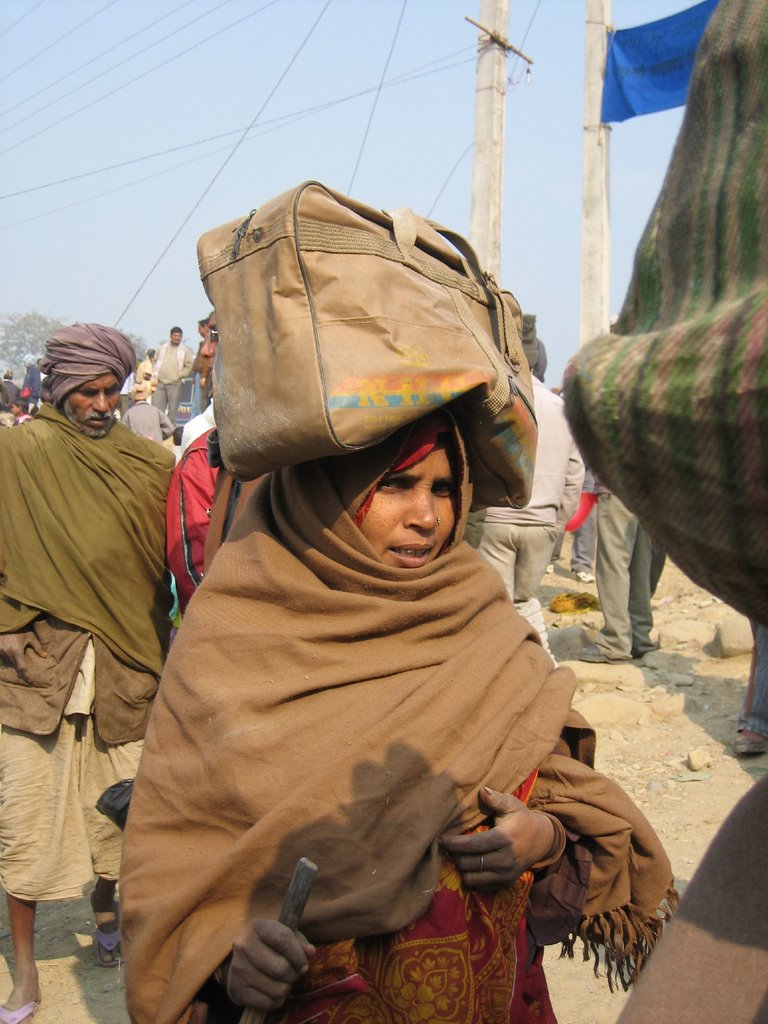
The tradition with Kamalari is practiced in all of Terai. Often the negotiation is done privately but in the Dang district there is an actual market for this. Marcus, Sara and I spent this Maghi visiting that market.
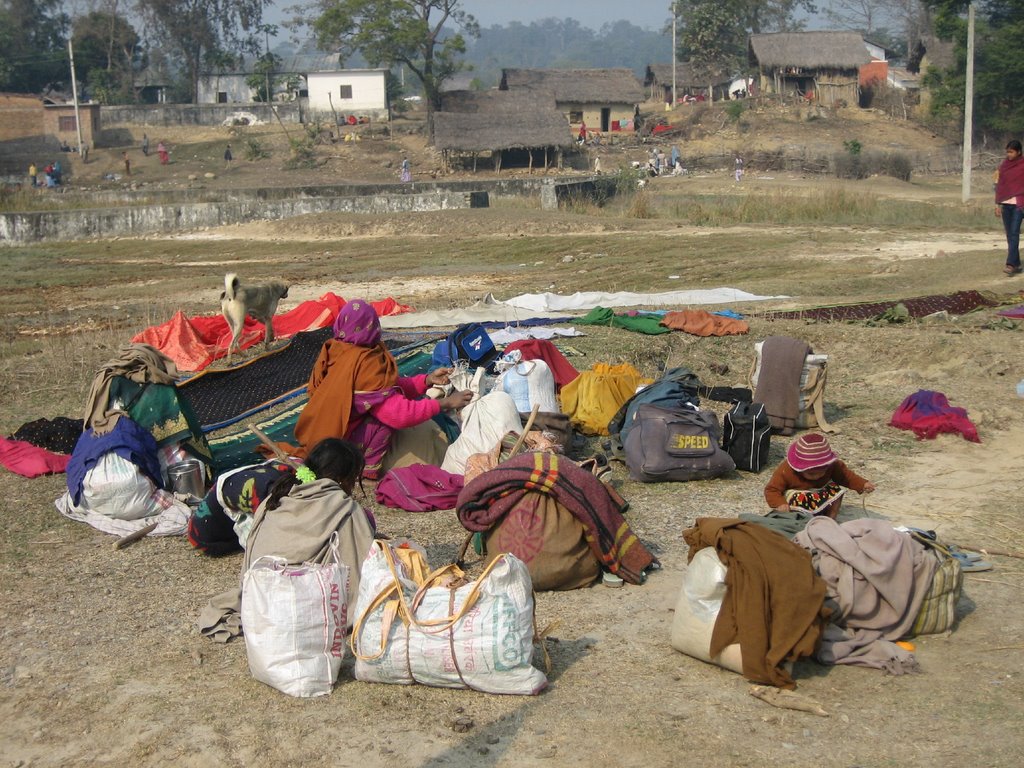
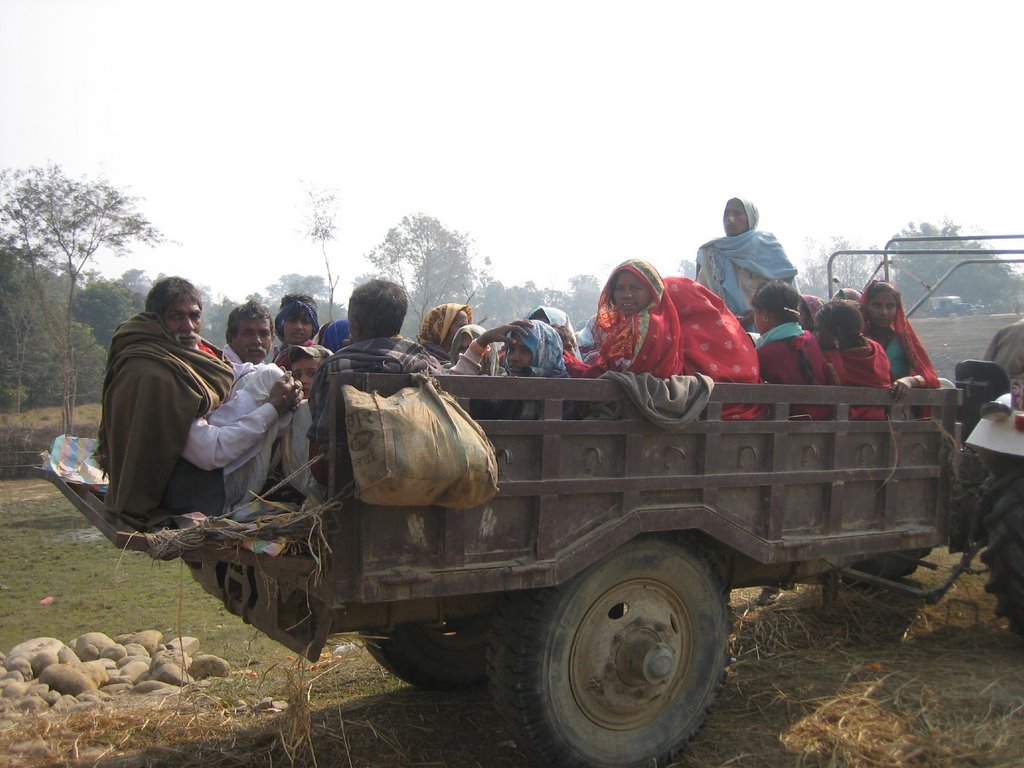
In the beginning it looked like an ordinary marked with plenty of food stalls and junk. Rather quickly we realized though that there also were Kamalari and not only that but entire families looking for work carrying around their small bundles with their few private belonging. Most likely that was ex-kamaras – free bounded labours – looking for a way to survive.

Since some locale organization has started to work against this tradition nothing was done out in the open and it was difficult to get people to talk. I did manage to talk to an Indian farmer, that had come to the market to purchase 10 workers for the farm in India. He told me, that a good worker would cost him 5.000 Indian Rupees a year – roughly 100 US.

This kind of slave trading cannot be classificed as human rights violations (as Sara and Marcus told me), since the people freely enter into this one-year contract. For many people the market in Dang is their only opportunity to find work and ensure the survival of the family. Still, it is sad to see these people sitting in groups with all their belongs waiting for a buyer. The Dang market gives a clear picture of the extreme poverty that a great part of the population of Nepal lives in.


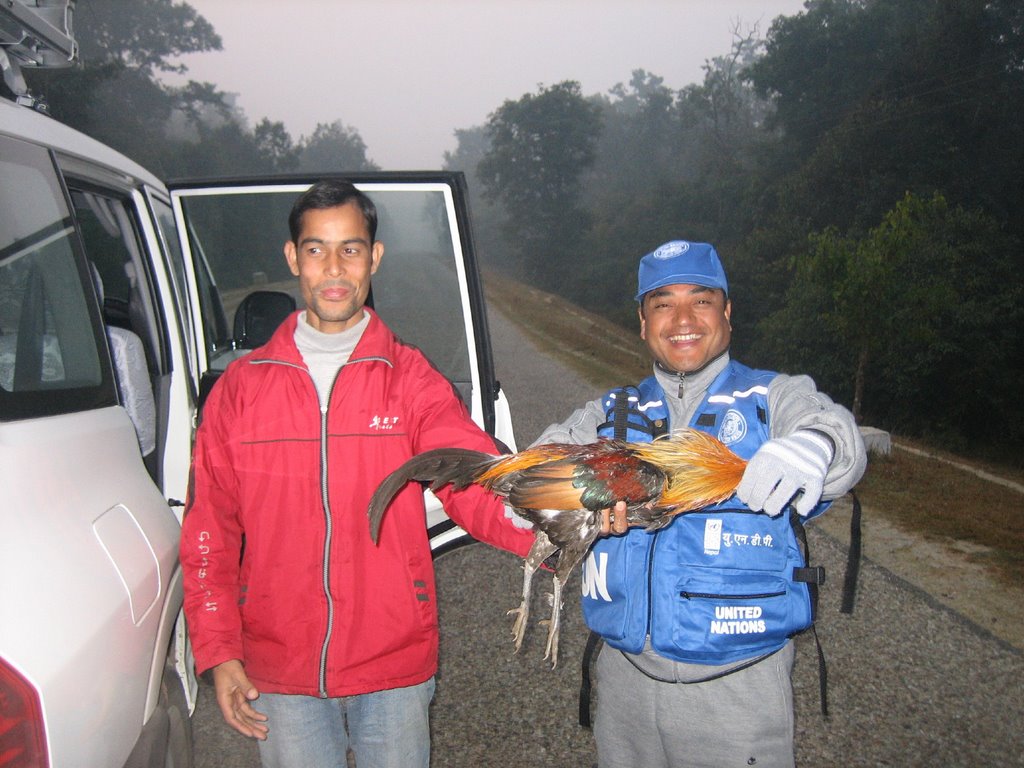
There was, however, one good story to tell from that day. On the way to the market our driver “unfortunately” hit a chicken on the road. He and the photographer went running after it into the forest and came back proudly carrying a dead chicken – a great contribution to the Maghi feast at their homes.

Nepalgunj Riots

After a lovely Christmas holiday in Denmark I am now back in Nepalgunj. Though having read about the riots in Nepalgunj during Christmas, I had actually completely forgotten about them again. However, the many burnt down shops and furniture and motorcycles on Surkhet Road drew a clear picture of a town that had been through 2 days riots. End result was 150 looted and burnt down shops, one dead and 20 wounded.

Since then I have participated in meetings about the riots and it seems that everybody is confusing about what had happened. Most people seem to believe that royalists were behind it. These are people very much against the democratic process that is taking place in Nepal in these days. It is also believe that the people doing the actual looting were outsiders paid to start the riots. At the same time the authorities didn’t act at all!

Video recordings show 200 police officers watching a handful of people looting a tv-store and carrying the goods pass the police. This happened on the 26th of December – a day there was curfew in Nepalgunj, which the police – obviously – was unable/unwilling to enforce.

To motive for starting the riots was the many different groups of people living in town. There is a big difference between Madhesi – the original Terai people with great affiliations to India and their own language – and the Pahadi people, who have moved to Terai from the hills and are now holding all important positions in the area.
Also between the large group of Muslims in town and the Hindis have there been conflicts. However, it is believe that there conflicts were merely used as an excuse to start the Nepalgunj riots.

It is worring to know that it takes so little to start a riot of this nature. In the moment everybody is working on finding out what happened, why it happened, why it wasn’t stopped and most importantly how to ensure that it won’t happen again in a town with so great differences in politics, economy, religion and life conditions.

Pictures will come later!

Saturday, January 13, 2007

Christmas in Denmark

Christmas at home was just as nice and relaxing as expected. Naturally, I ate too much food and candy joined by too many beers and glasses of wine and too little exercise – but since it is once Christmas once a year, so it is allowed…..

It was great to see the entire family especially my niece and nephew, Simon and Sara, how have gotten so big. After spending about a week in Horsens with the family, I went to Copenhagen to see the friends and celebrate new years. Those of you who know me can probably guess how my days in Copenhagen were spent…and that I now need an extra vacation just to get over my vacation ;-)

Pre-Christmas in Nepal

Though coming home for Christmas there was still time for some Christmas traditions in Nepal.
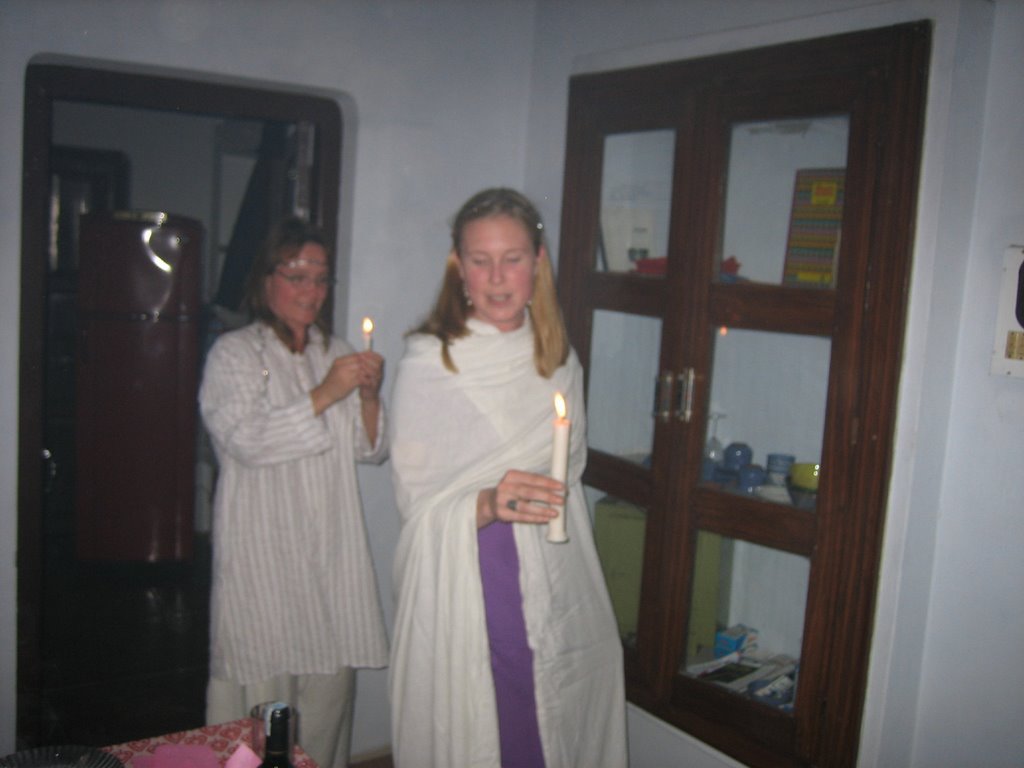
Having enjoyed several glasses of Glögg here and there (hot red wine with some good stuff in it!) I did have the best one served at my Nepalgunj colleagues, Robin and Nanna, house for the Santa Lucia celebration - following the nice Glögg there was a mini Lucia-parade performed by Nanna and Sara followed by dancing in the living room. A lovely night in Nepalgunj that ended with Greg momentarily losing his car keys and waking up the entire neighbourhood with the help of his car alarm.....


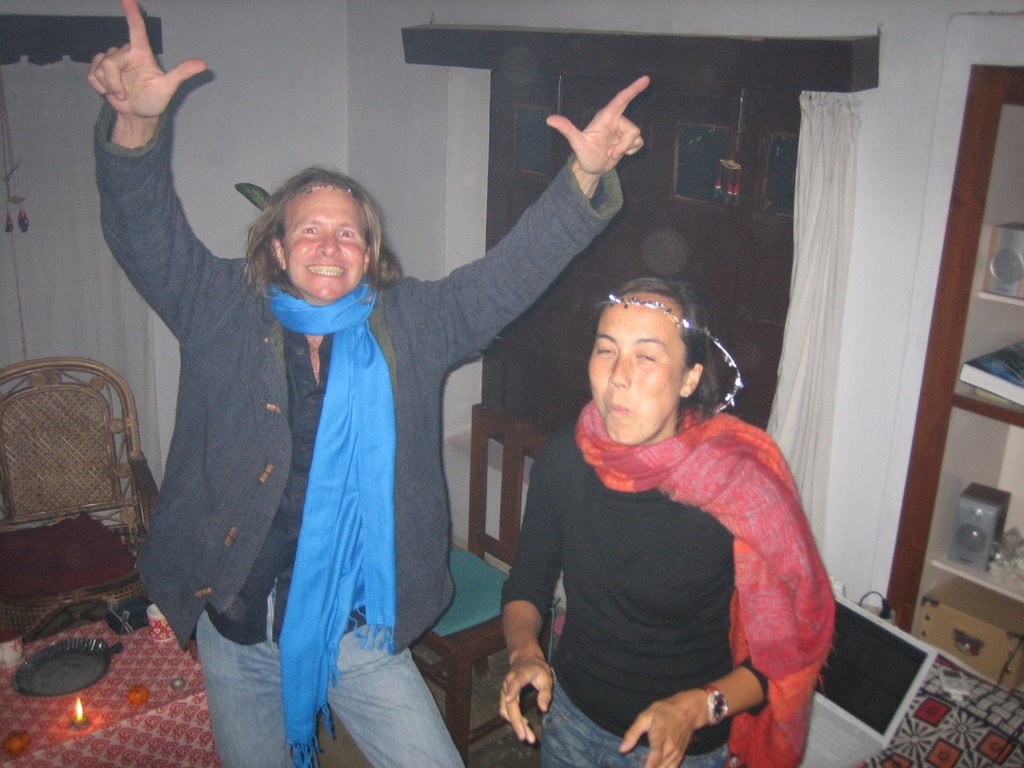
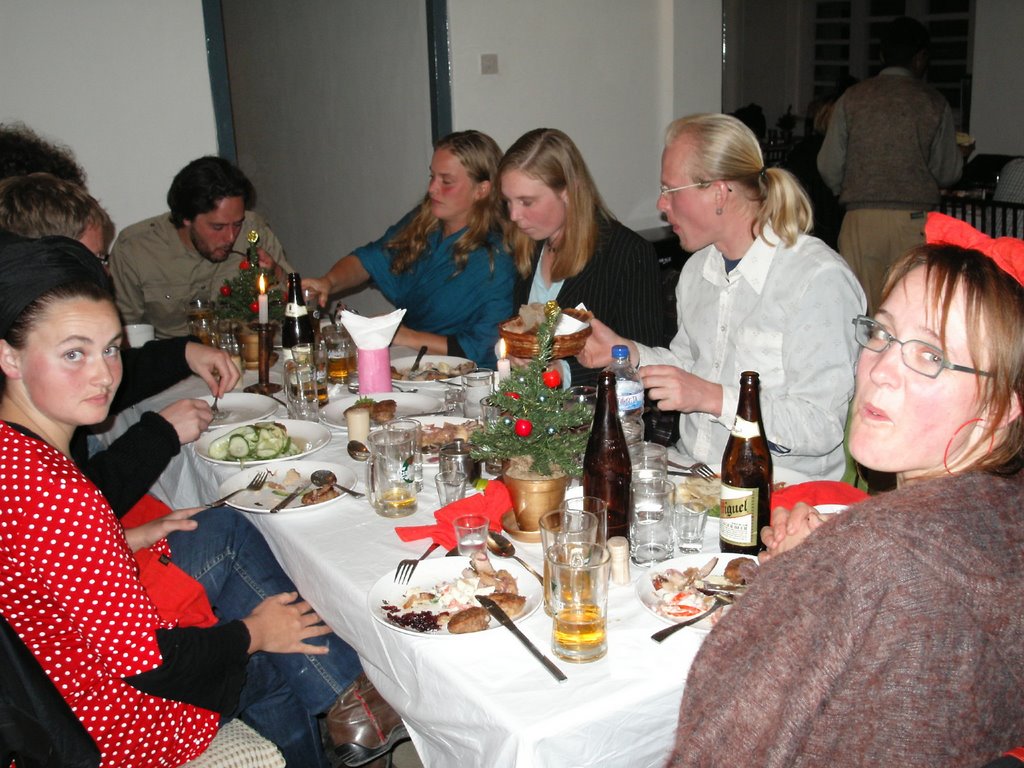
No Christmas without a very wet Christmas-lunch/dinner. Since all the MS Development Workers were gathered in Kathmandu for first aid training, this was a golden opportunity to have a Christmas party. And where else to go than Baryo Fiesta, a restaurant owed by a Danish chef, to eat wonderful Danish Christmas food. Unfortunately, there was no snaps to go with the food and there was plenty of Vodka – check out the picture of Sara demonstrating how the Swedes manage to get drunk as fast as they do.
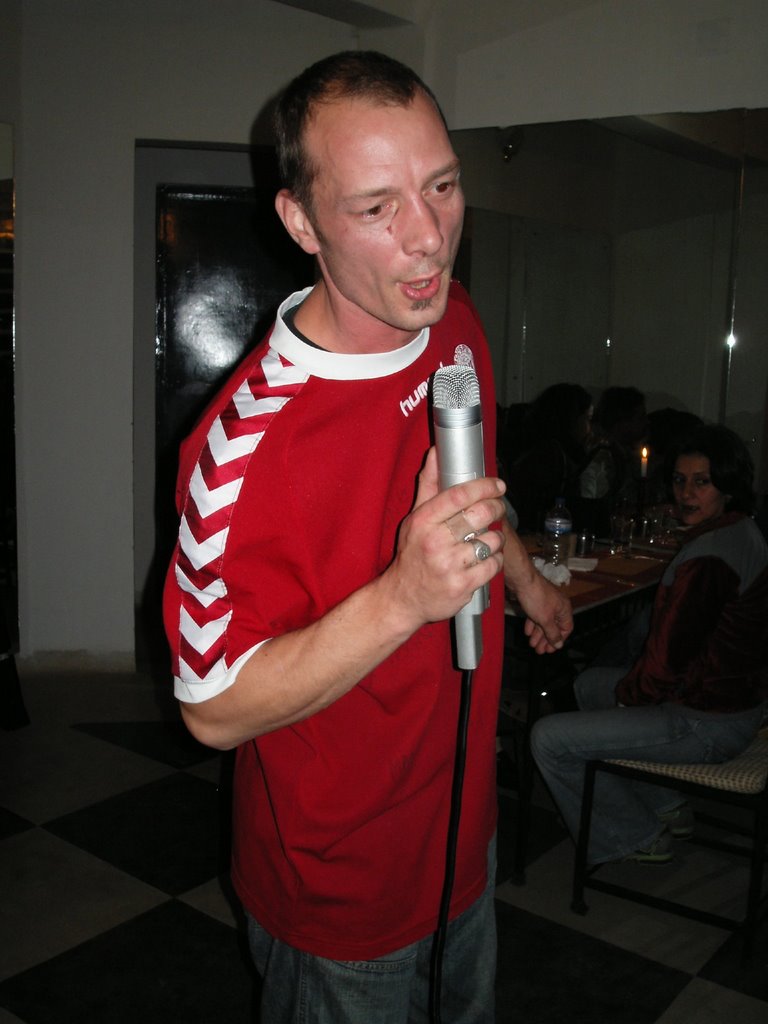
After several bottles of Vodka we also felt comfortable enough to follow Sørens numerous Karaoke performances – not a pretty sight but a very fun night!

And then is was off to Denmark….

Tuesday, December 12, 2006

Back in the field

The three weeks in Kathmandu has passed and I am back in Terai for a week before going on Christmas holiday. It is good to be back in the warmer climate, though the winter is also felt here in the cool nights.

It has been planned for a long time that I this week would go to Surkhet with my colleagues from CWD. Surkhet is a district two hours drive north of where I live and an area I have not visited yet.

We had planned to leave Monday morning but due to a bad storm the night before it was postponed till Tuesday. At first I believed it to be the Nepali fear of rain that has caused this delay but once I saw the road and the many landslides I was quite glad that we had waited.
Not more than 50 km. from my house the hills starts (or what we in Denmark would call mountains). It was an incredible beautiful road but also in a very poor condition because of the many landslides. On top of that it is a very narrow road with some mighty big buses coming towards us. My colleagues were quite impressed with the beautiful views which included the snowcapped mountains of the Himalayas. Unfortunately, I had to keep both eyes on the road with less time to enjoy the views.

We reached Chhinchun County without problems and were able to start the programme of the day which basically consisted of introducing me to our groups in the area. Surkhet is an area that has been badly affected by the conflict and great parts of the district have been under Maoist control. This means that my colleagues have been hesitant to visit the area and our groups here have received few visits from CWD throughout the last 10 years. It was quite easy to feel the dissatisfaction within our groups and they had also decided to act upon the lack of support by starting their own organisation. In principal a good idea expect for one thing; they have no money!
They had hoped for help from MS but I had to inform them that that was rather unlikely. Instead, I offered to give them training in proposal writing in order for them to apply for funds from other organisations in the area. Now that peace has come to Nepal the money is pouring in from all sides and it is necessary to join the “race for funds”. It looks to be an interesting project for me to start on, even though it seems I would have to spend some time with these women first to ensure that they take an active part in the process. I have no idea of which organisations there are in the area so that is where they would have to step in – something I sensed they were not too keen on.
No matter what the first step will be to go to the office tomorrow and talk to my colleagues about our possibilities for supporting these women in starting their own organisation and then take it from there. One thing is for sure, though, I hope to return to Surkhet soon, since it is an incredible beautiful area.

Sunday, November 26, 2006

Kathmandu Blues

It has been awhile since I last wrote and you are probably wondering what I am doing… so let me share with you: after two weeks of language training in Nepalgunj I am now in Kathmandu for three weeks of language and lots of meetings.

When living in a small isolated town it is great to arrive at a civilised place, however, it isn’t all good: it is cold here, I miss my colleagues and friends in Nepalgunj, I miss my apartment, it is extremely expensive here and most of all it is just too cold!!! Yet not everything is bad – just to mention a few good things:

Exciting meetings and workshop
Being a member of the MS Policy Advisory Board I attended a meeting last week in that board. We have had two MS DK people visiting and with them we have discussed the new democracy focus of MS and how to operationalise this focus. It was a really interesting 2-day meeting.
At the moment we have yet another two MS DK people visiting monitoring how MS Nepal works with gender mainstreaming. We had an interesting one-day workshop and now it will be interesting to see whether the discussed ideas will be implemented.

Get on the bike
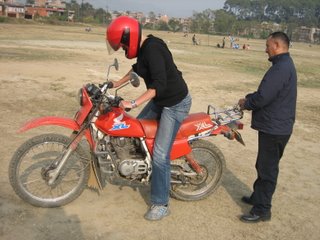
Since I am here for three weeks there is enough time for training – not only in language but also in how to ride a motorcycle. My transportation officer has from the beginning claimed that a bike would be useful for my work – and I tend to agree with him, so he has started training me. After two lessons on a very bad field I have now been given the keys and permission to drive in the MS parking lot….oh yes, I am learning! Luckily, the police authorities had already foreseen that I would need a license to ride a motorcycle, so they were nice enough to issue this when I had my license for the car made 3 months ago, which means that I won’t have to worry about taking a test…..hurrah for incompetent Nepalese.

Goodbye and thank you
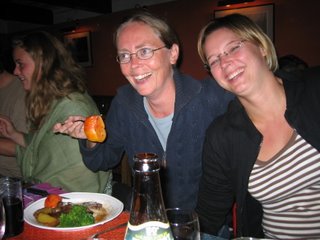
I made it to Kathmandu just in time to say goodbye and thank you to a colleague and friend, Sussie. I met her during my first days in Kathmandu and since she has been a big part of my visits to Kathmandu – it will not be the same visiting Kathmandu without her being there and I am glad to be in Kathmandu to see her off.

Thank you for everything, Sussie, and good luck with everything back in Denmark.

Good food and drinks
Though I don’t exactly starve in Nepalgunj I do enjoy being in Kathmandu where delicious steaks, exotic cocktails and Danish food is available. Yesterday I attended the Grand opening of a new restaurant owned by a Danish guy, Soren Cook. Not only does he make delicious food he also bakes amazing rugbrød (Danish ryebread). I think there is little doubt that I will be a frequent visitor there for the next two years.
Besides from that it is just great being able to go to a bar – one thing that is missing in Nepalgunj. At the moment it is high season and the town is full of tourists, so the nightlife is busy. I try to take an active part in it, but am still affected by the fact that normal bedtime in Nepalgunj is 10 p.m.

Meeting new and old friends
Four new Development Workers and two spouses have arrived in Nepal and are staying in Kathmandu for language training. Amongst them is Karen, my good friend from University. It is great – not only to see her again – but also to meet the many new people who will be my future colleague. We all stay at the MS Guest House and are having a great time, especially since the table tennis table has been installed right next to the pool table. We have also gotten a few children here, which is great. Just last Saturday we held little Christians 1-year birthday.
I have also had time to meet friends from other organizations, who have been working in Nepalgunj for longer or shorter periods and are now living in Kathmandu. I do try to socialise every chance I get….
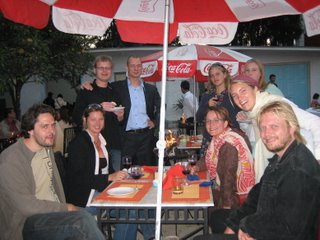
That was a short update on what I am doing these days. Unfortunately, I have also gotten a bit of a cold because of this horrible climate, but hopefully the two hours massage I am going to now will help on that….

Monday, October 30, 2006

….bringing the toothbrush to work!

Since the great festival month is over there now seems to be time for the many conflict creating activities that this country suffers under.

The new trend in Nepal is to make Banda. The Maoists have been using this method during the entire armed conflict, but now the local population also has developed a taste for it. These days a Banda is normally started because of a road accident where one or several person dies. Banda means closed and that is what happens when a Banda takes places. The people in the area of the accident simply close down the road thereby stopping al traffic. If an accident happens the family of the victims demands compensation from the bus- or transportation company involved. Until this compensation is paid no one are allowed to use the roads.

Neither politicians nor police interfere with these Bandas. Actually it seems like the local police rather enjoys having a change to wander around talking to the many travellers being held hostage on the highways.

At the moment Nepalgunj is paralysed by a huge Banda, which has made life difficult for many people. Lucky for me my colleague Sara lives in the northern part of town, where I can safely park my car and bicycle the rest of the way home – after lifting my bike through the Banda of course. The morning I was expecting to go all the way to work – 20 km. – on bike, since the transportation company involved in the accident that killed a small girl had decided to make a contra-Banda. However, I did manage to get the car on the road and get to work. Now it will be exciting to see whether I will be able to get back home. I have just been told that a new Banda between my work and Nepalgunj is being made…..so it will be with a bit of nervousness that I will drive the 20 km. home from work this afternoon – I might have to turn the car around and sleep in the office tonight….

Wednesday, October 25, 2006

Sara - my colleague


I guess I never did introduce my colleague Sara so I better do that now.

Sara is a real Swedish girl better known as one of the many “Wanna-be-Danish”. Like me she is 30 years old. She is a human rights lawyer and in Nepalgunj she works with a human rights organization, HURON.

Sara and I met each other at a MS-seminar in Helsingør in April. We were together on the course in Tanzania and during the introduction period in Kathmandu. We moved to Nepalgunj and started working at the same time.

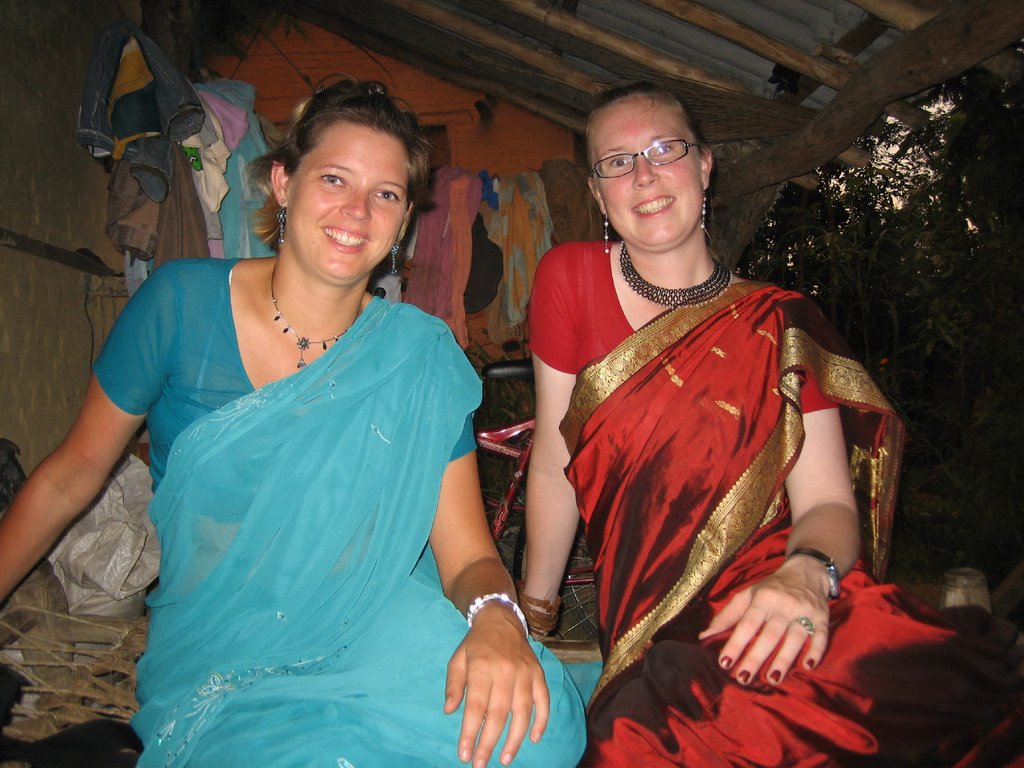
Though our work and everyday life is quite different it is incredibly nice to have a good friend and colleague to share it all with - and someone to help putting on the sari…..

Tihar - yet another festival

Nepal certainly is the land of festivals and October is the festival month. Tihar is the second big festival in October and is basically about honoring sisters and brothers, who give each other tika and exchange gifts.

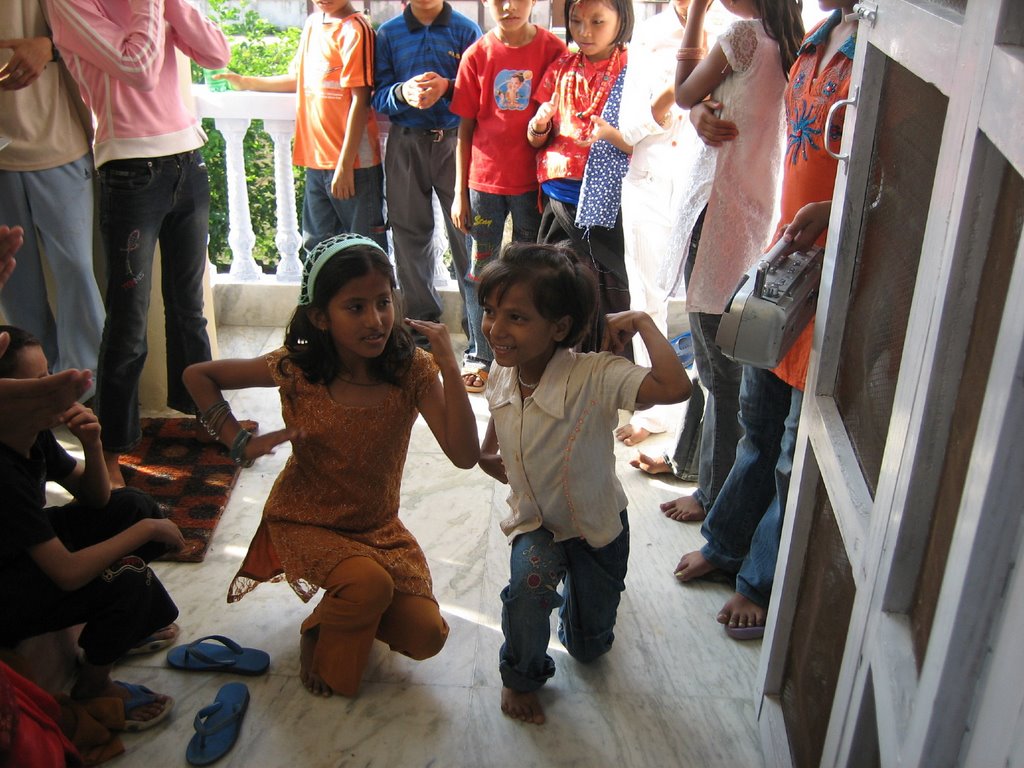
However, the festival is also an opportunity for improvised song and dance groups to make extra money. Scores of these groups – especially children – go from door to door and perform singing the same monotone song before plugging in the small stereo to dance to Nepali music.

The children expect a bit of candy and 5-10 rupees for their performance, whilst the adults demands 200-500 rupees to their uninvited appearance. Since this is a great chance to make money these groups work around the clock during Tihar. We lock our gate pretty early, but the neighbour keeps it open all night, so thanks to the loud Nepali music coming from their front yard I haven’t been able to get much sleep during this festival.

Since Tihar is a family festival I have been invited to join my families in the celebration (my family in Nepal is my colleagues). This naturally requires that I show up in Sari and dance Nepali dance in front of the entire village. I do enjoy this part of the festival though. The hard part comes when dinner is served. You are expected to eat ½ kg. of rice and an equal amount of vegetables and meat. If you are not able to finish this and ask for extra rice your host will be extremely disappointed and unhappy. Yes, it is not always easy to be a foreigner in the land of festivals and dal bhat…..

Sunday, October 15, 2006

The honeymooner!

As some of you might have noticed I am extremely happy with my life at the moment – Nepal is an exciting place to be, the job and colleagues are great, my apartment is nice and the weather is hot and humid just as I like it!

According to the literature on expats I am going through the first phase of a long cycle during my stay here. This phase is called “The Honeymoon”. Often when I talk to people how has lived long they shake their head, look at me with a knowing smile and tell me that the honeymoon period will not least…

Well, that might be but for now I am planning on making the most of it. My idea of honeymoon has something to do with nice beaches and cocktails and where better to get that than in Thailand. So during Dashain – the biggest festival in Nepal – I used my 9 day forced holiday to go on my honeymoon in Thailand.

The good thing about Thailand is that I have been there so many times now that I don’t have to worry about sight-seeing, I can just relax and hang out – so that I did!

My first day in Thailand I met up with Hans, one of my oldest friends from Denmark, he and his friend were at the end of their holiday flying home the same evening. But there was time for a lovely lunch drinking beer out of cups (apparently there is a law against serving alcohol between 2 and 5 pm!).

Later that night I met up with another wonderful friend, Akbar. He lives in Bangkok and through him I experienced some of the many great restaurants, bars and clubs in the city.
I also went with Akbar to Koh Samet for some quality time on the beach. Akbar could only stay for a few days though. Being by myself on the beach – with my cocktails and books - just made my honeymoon even more special and it was some of the must relaxing days I have had for years. The last days of my honeymoon was spent in Bangkok; shopping during the day and hanging out with Akbar in the evenings - absolutely lovely!

Now I am back in Nepal with lots of new energy. I am still happy as can be, so I guess the honeymoon will continue for a bit. According to the literature on expats I should be getting close to the so-called half-year crises – maybe this blog will reflect that; time will tell!

Monday, September 18, 2006

My first dinner party

After living as a student for many years I am finally able to live in a place big enough for parties. And being a sucker for parties I decided to throw one right away.

The first people to invite into my new place was naturally my Nepali family; my colleagues. Since they all live far away it had to be in the daytime, so I invited everybody for Dal Bhat (the national dish here) for 11 a.m. Most of them showed up 2 hours late, but that is Nepali culture!

Having next to nothing in my kitchen I had ordered food from my favourite restaurant and it was great – especially since it was 90 rps. pr. person (a bit more than US$1). There was also plenty of it, so I was looking at living on Dal Bhat the next weeks, but luckily they took all the left-over with them……

This being my first real dinner party for 25 people I must say that is all went very well, but then again my guest where very easy to please. Most of them live in houses constructed of mud and the fact that I had no furniture was no problem to them – the floor was easily accepted. The only thing I did not regard was the fact that when it is as hot as it is here 25 people can consume an enormous amount of water – without the water pump outside my house I would probably have had people fainting all over the house.

The real reason for this little get-together was actually a small meeting – about me. As you know I work in two different organisations and it has been a big problem to figure out when to work where. So this meeting sorted it all out – at least I think so…strange participating in a meeting about me without knowing what is being said – I really need to learn this language.

After this very quick meeting it was time to dance – despite of the heat – and everybody had a great time. Unfortunately, people had to travel a bit to get home, so the party ended early – maybe next time I should arrange a sleep-over....

Wednesday, September 06, 2006

Driving in Nepal

Before coming here I had a lot of ideas of what it would be like to be driving in Nepal, but for once I was wrong:

In Nepal you drive in the left-hand side
According to the law that is true, but I found out that in Nepal you drive where there is room! Sometimes that is on the left side of the road other times on the right side. Mostly you simply drive in the middle of the road!

The roads are made for vehicles
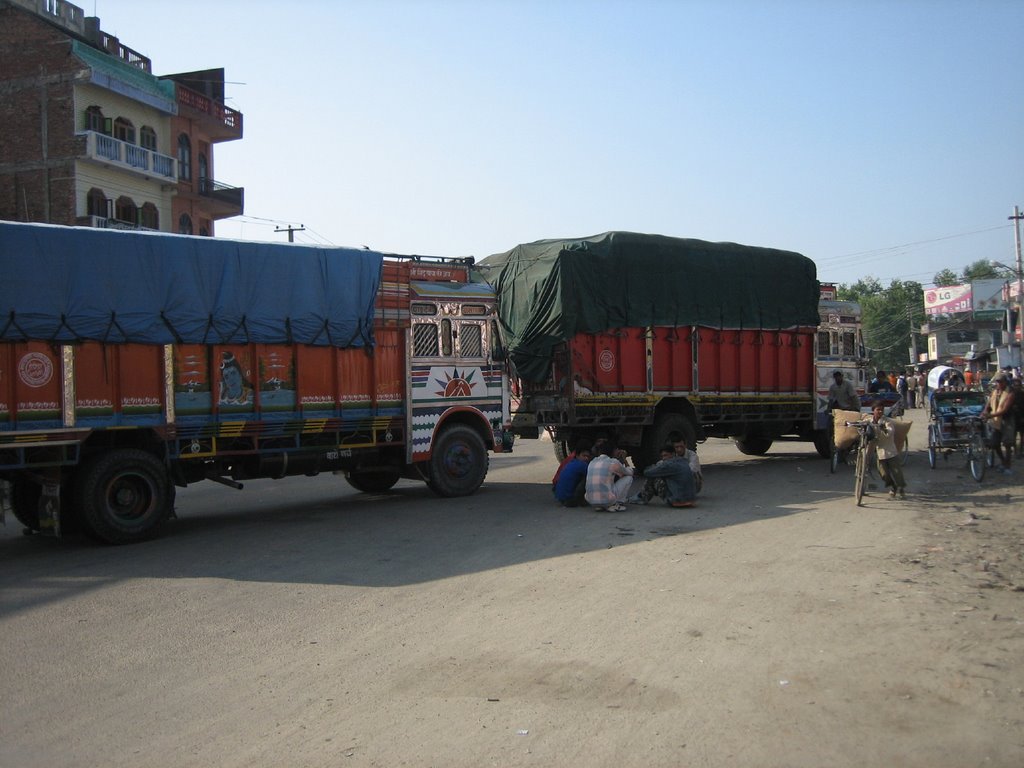
No, actually there are very few cars on the road in the Terai. In stead there seems to be everything else; the roads serve as big pedestrian streets where people cheerfully wander around stopping to chat with friends and street vendors. On top of that there are horse carriages, bicycle rickshaws, donkeys, buffalos and cows lying in the middle of the road.

Always use your rear-view mirror
No, there is so much happening on the road in front of you, that there simply is no time to look in the rear-view mirror. The road is often full of potholes and often a goat comes jumping out in front of the car. That is why you have to concentrate 100 % on looking ahead of you.

Only use the horn when absolutely necessary
Wrong again. You use the horn all the time. Since you don’t use the rear-view mirror, you have no chance of knowing whether or not somebody is about to overtake you – unless they use their horn. Besides from that people are very reluctant to move, if they have found a nice spot on the road. The horn can be your only weapon on the road.

Only overtaken when there is room
No, you overtake when the thing in front of you is moving too slow (bus, car, horse carriage, buffalo, etc.) whether or not there is room is not so important. Often you drive off-road when overtaking and should a car come towards you, well then, it just has to slow down or stop even, until you have passed.

My car is my work tool
Yes and no. Of course it is there to make my work easier but also to make life easier for everybody I know and their friends and acquaintances. So far I have managed to have ten passengers with my in the car; front- and backseat. This includes a music group who entertained with Nepali songs during the ride.

Well, you can say a lot about driving in Nepal, but it is never dull. I am in the lucky position that MS has provided me with a nice big Hi-Lux that never fails to bring me home safely. So I can just shake my head of the traffic culture here and take it all as a great experience….

Wednesday, August 09, 2006

Tika

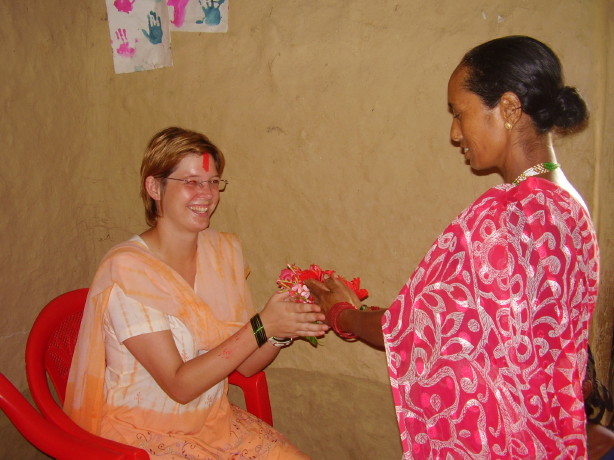
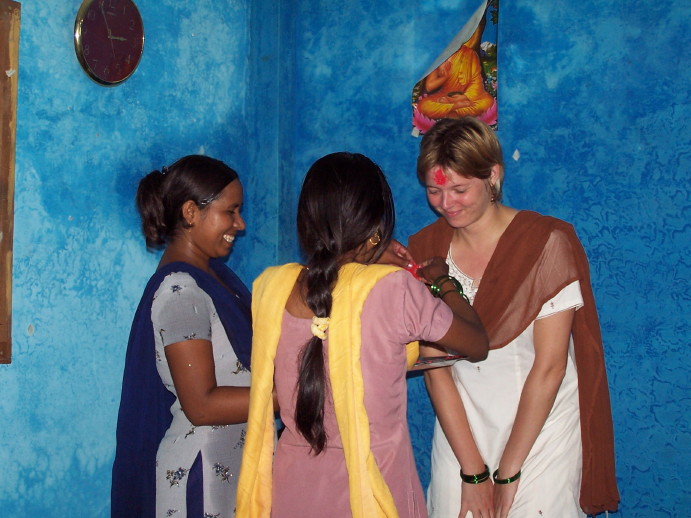
The universal symbol of Hinduism is the tika; a mark or dot placed in the middle of the forehead. A tika may be a small plastic dot, a smeared line of sindoor (red power), or a forehead-wide mixture of yogurt, rice, and sindoor.
The tike is a mark of blessing from the gods. It is also an acknowledgment of the divine within us all.

In many pictures of Shiva (one of the greatest Hindu gods), he is seen with a third eye placed in the middle of his forehead. The tika symbolises this third eye.

Receiving a tika is a common part of most ceremonies, an acknowledgment of the divine presence of the occasion and an invocation of divine protection for those receiving it. Receiving a tika on arrival or departure is an indication of the respect and affection of the people involved.

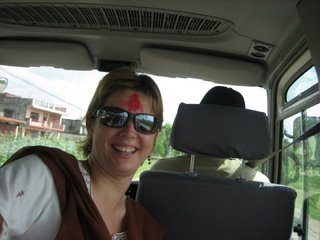
During my short time in Nepalgunj I have managed to receive numerous tikas from my future colleagues and women’s groups. I find it to be a beautiful ceremony and appreciate the symbolism of the tika. However, I have also learned the usefulness of caring a small mirror in your purse – and never wear white under a tika ceremony.


Tuesday, August 08, 2006

CWD – Centre for Women Development

Besides from working with DWO half of my time will be spent with CWD, Centre for Women Development. CWD is a small community based organisation started by women from the area in 1997. The overall vision of the organisation is to improve the livelihood of women in Nepal. The organisation works with 40 women’s groups – established by CWD – in Banke, Bardiya and Surkhet districts. These groups receive training in everything from literacy, health and group formation to bookkeeping, human rights and domestic violence.

CWD gives these women the knowledge and self-esteem they need to be able to improve their life and the life of their family. CWD helps these women become independent women able to demand their rights on both local and national level.

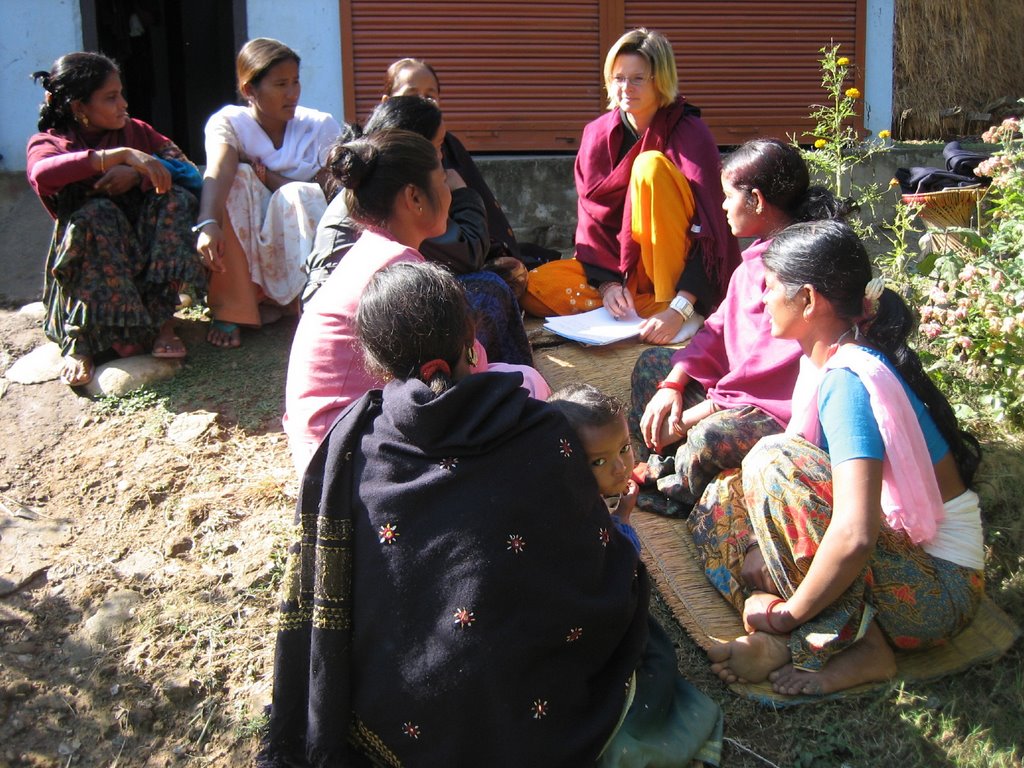
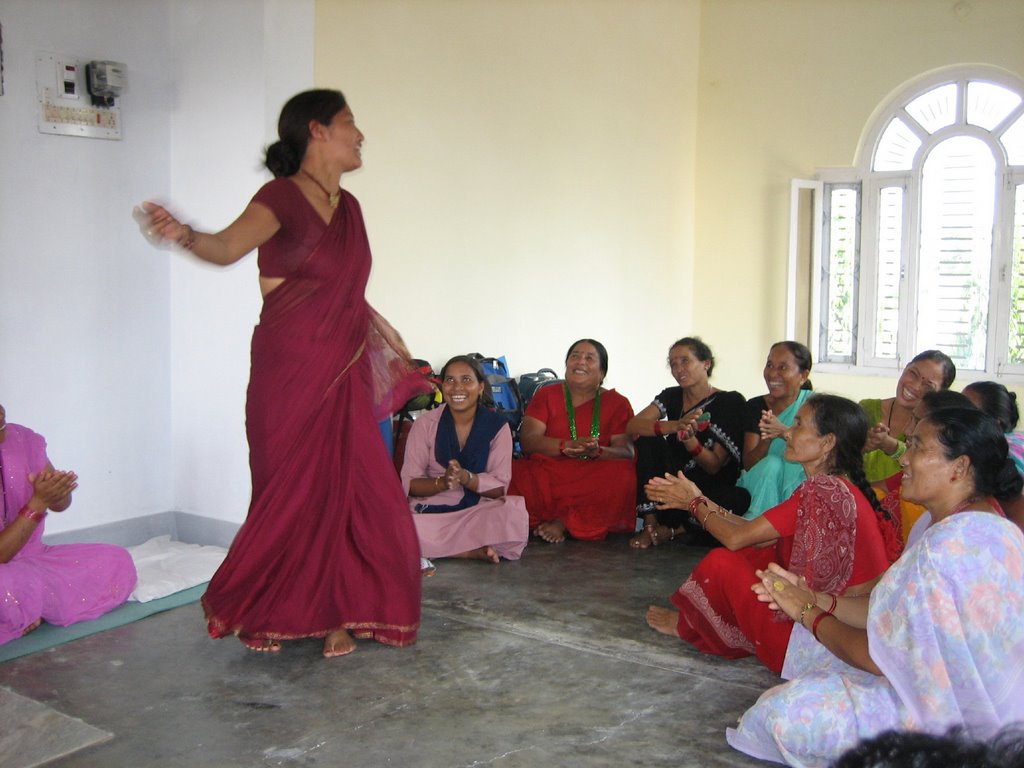
During my visit with CWD we visited two of these women’s groups. It is clear that CWD have had great success with their work. One of the groups has functioned in almost 10 years and all the women are now able to make their own money – thanks to CWD. Not only does this mean that they are able to feed their family, but also that they can send all of their children to school. One of the women in this group has been elected as board member of CWD, while another woman has been offered a job with a national NGO. These progresses would have been unimaginable for these women only 10 years ago.

My work with CWD
As with DWO my role at CWD is as advisor. I will mainly work at the organisations office (see the picture) in Khajura about 4 miles from Nepalgunj. But naturally I will also be visiting the different women’s groups in order to form an impression of the work in the groups and asses in which areas CWD can improve their support to the groups.
Despite the fact that I will be working in the same areas as with DWO, the tasks are quite different. Especially one task sounds appealing to me; 6 of the groups have decided to get together and form a cooperative and thereby leave CWD. This decision is fully backed by CWD, but they are very much aware that the cooperative will need a lot of support and help in the initial start-up phase, where many important decisions need to be made. CWD has asked me to advise them in this process. It will be incredibly exciting to work with and follow the creation of this cooperative during the next two years.

My colleagues at CWD are all women. The vast majority are women who themselves started as member of a women’s group and now have worked their way up to organisational level. They are strong and committed women that feel really strongly about their work with CWD. I will be working closely with Khagi, project coordinator and Purnakala, the organisations secretary. Both are great women but unfortunately, they hardly speak any English, so the first couple of months will be hard.

CWD is an organisation that in only 10 years has worked its way up to being the leading women rights organisation in Mid-West Nepal and it will be incredibly exciting to work with such a dynamic organisation.